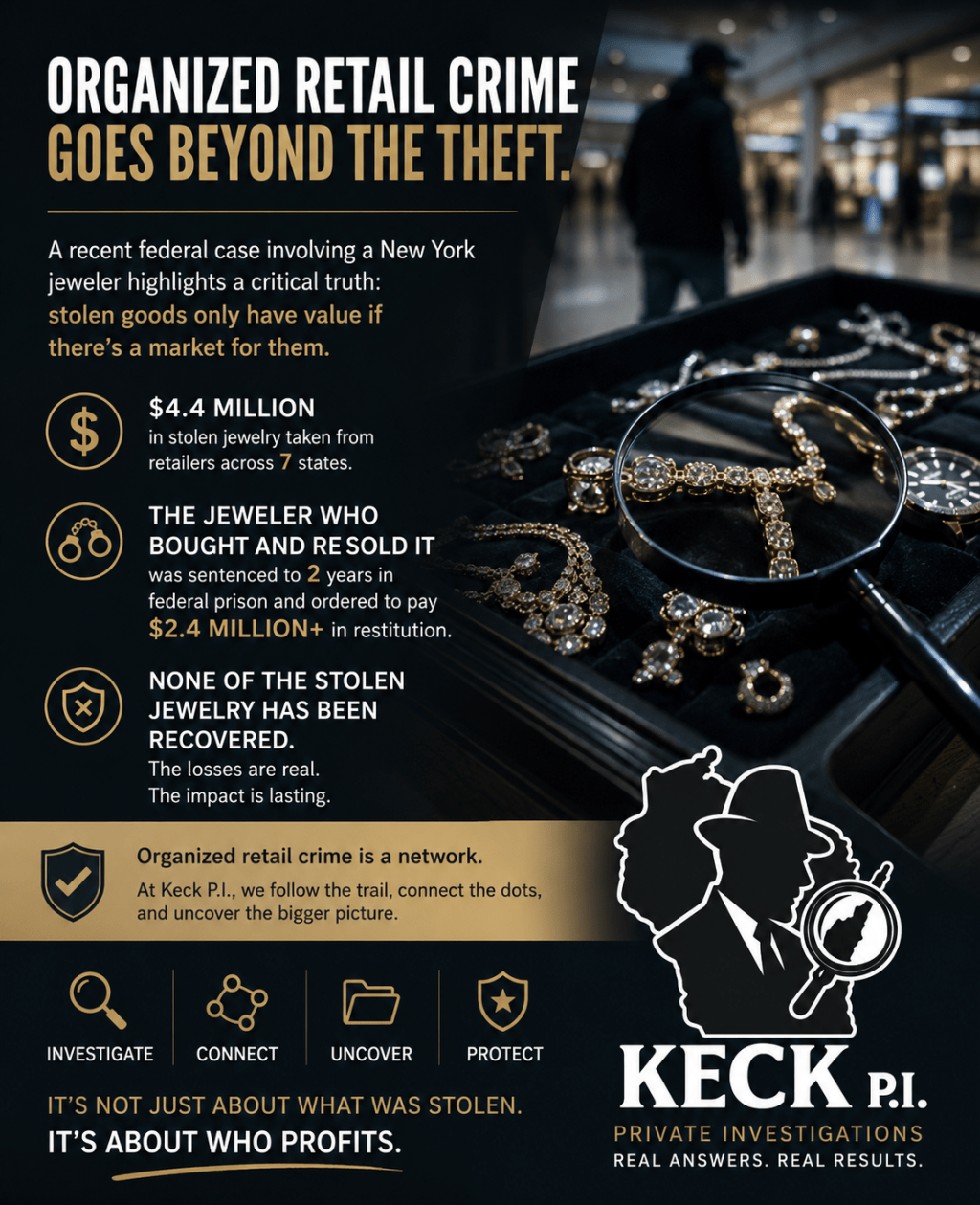
A recent federal case involving a New York jeweler illustrates a reality investigators and law enforcement have understood for years: stolen property only has value if someone is willing to buy, move, or resell it. According to prosecutors, the operation involved more than $4.4 million in stolen jewelry taken from retail locations across seven states. The jeweler who knowingly purchased and resold the merchandise was sentenced to two years in federal prison, ordered to pay more than $2.4 million in restitution, and none of the stolen jewelry has been recovered.
Cases like this reinforce an important point. The individuals committing the thefts are only one part of the operation. Organized theft rings often depend on brokers, fences, and seemingly legitimate businesses that create a market for stolen goods. Following the money and identifying those connections is often just as important as identifying the people who carried out the thefts.
For retailers, loss prevention is no longer limited to cameras, alarms, and security personnel. It requires understanding how organized crime networks operate, how stolen merchandise is moved, and where vulnerabilities exist throughout the supply chain.
Investigations that connect these pieces together help expose the broader criminal enterprise rather than addressing only its most visible participants.

At Keck Private Investigations, we recognize that every case has a larger story beneath the surface. Effective investigations focus not only on what happened, but also on who benefited, how the operation functioned, and where the evidence leads.
 Keck Private Investigations
Leave a comment